Viet Nam hosts Asia-Pacific Dialogue to advance global reflection on heritage authenticity
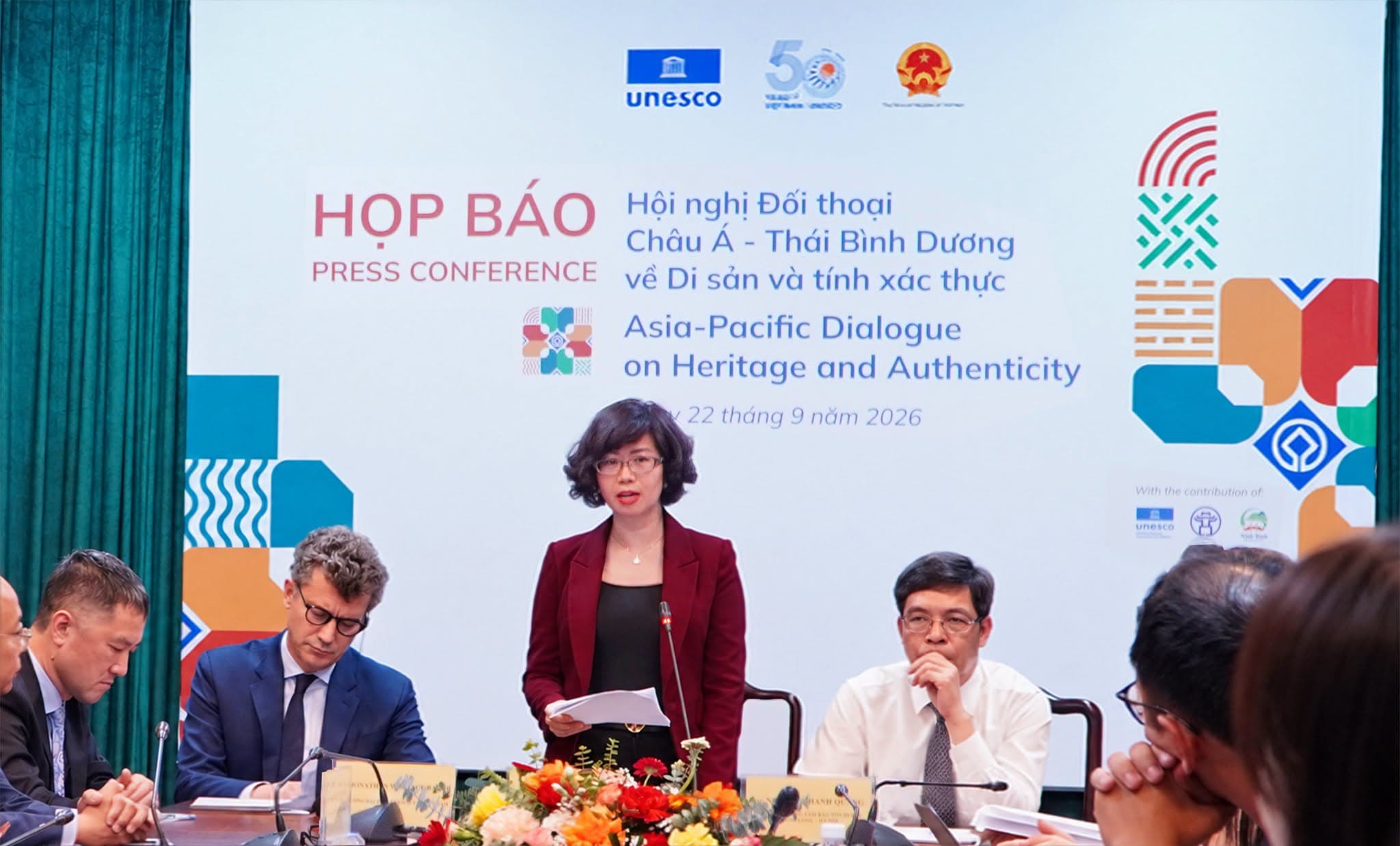
The Asia-Pacific Dialogue on Heritage and Authenticity will take place in Ha Noi and Ninh Binh, Viet Nam, from 27 September to 1 October 2026, bringing together around 250 international and regional experts to contribute Asia-Pacific experience and perspectives to the ongoing international reflection on authenticity within the World Heritage system.
The Government of Viet Nam and UNESCO are convening the Asia-Pacific Dialogue on Heritage and Authenticity from 27 September to 1 October 2026, bringing together around 250 participants from across the region and beyond, including government representatives, heritage experts, site managers, researchers, community representatives, knowledge holders and youth.
The Dialogue is co-organized by the Viet Nam National Commission for UNESCO, the Ha Noi People’s Committee and the Ninh Binh Provincial People’s Committee, with the participation of relevant national and local authorities.
Authenticity in a changing world
More than thirty years after the adoption of the Nara Document on Authenticity in 1994, the world in which heritage is conserved has changed considerably. Living practices, local knowledge, spiritual associations and relationships between people and nature are increasingly part of how heritage values are understood, while climate change, conflict, disasters, urbanization, tourism and new technologies are creating new challenges for how authenticity is assessed and safeguarded.
The Asia-Pacific Dialogue continues the international reflection advanced at the 2025 conference in Nairobi and responds directly to World Heritage Committee decisions encouraging similar regional expert dialogues. At its heart is a practical question: how can authenticity be understood and assessed across the very different ways in which heritage survives, changes and continues to carry meaning?
Participants will look at where existing approaches remain useful and where they need to better reflect the realities of heritage today, including reconstruction after conflict or disaster, living heritage and the role of communities in sustaining heritage values. Comparative case studies, working groups and field-based analysis will allow participants to test existing approaches against real heritage contexts and identify where further guidance may be needed.
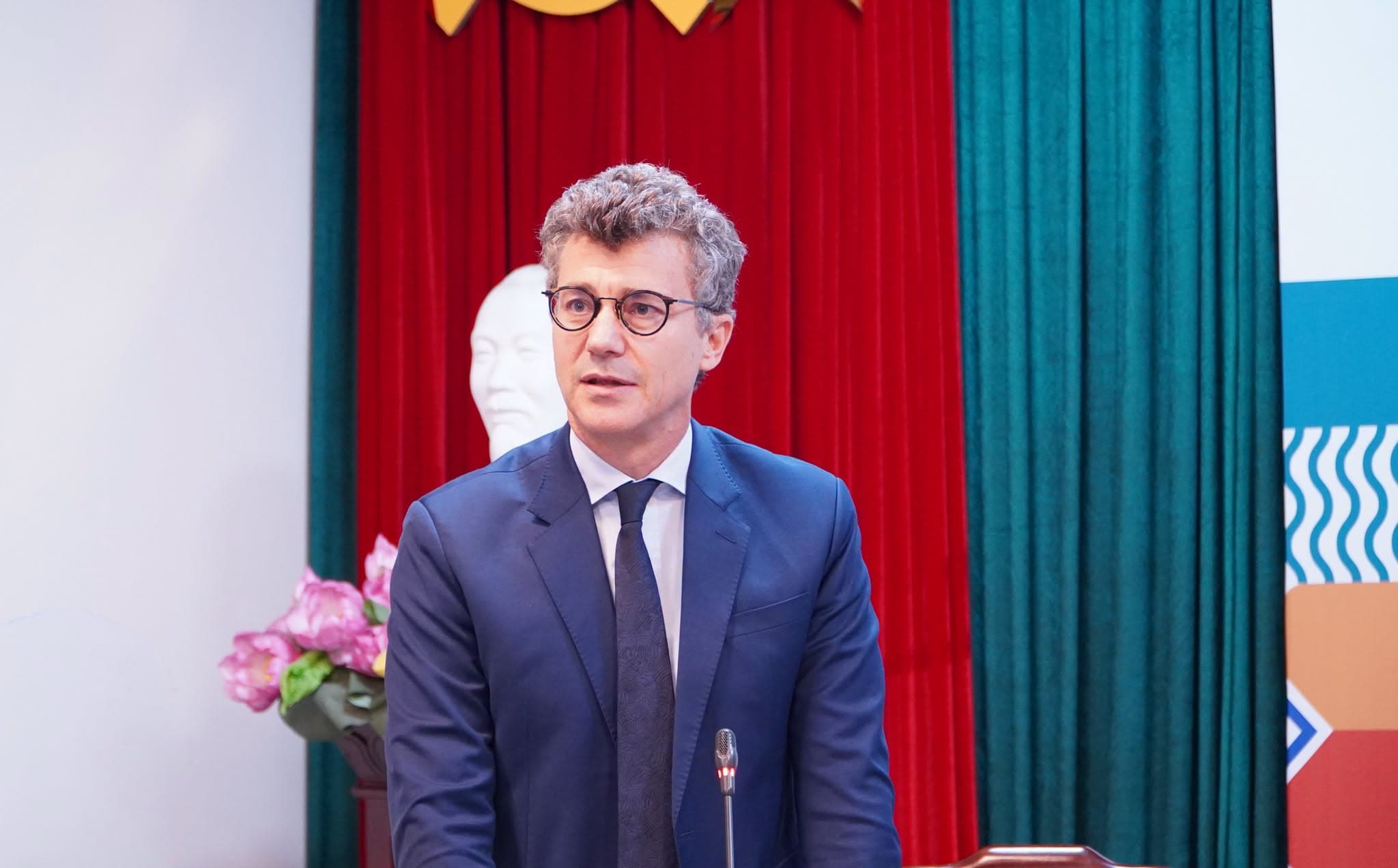
Mr Jonathan Wallace Baker, UNESCO Representative to Viet Nam, said:
"Authenticity is fundamental to how we recognize and safeguard World Heritage, yet it has to be understood in the cultural context in which heritage exists. The Asia-Pacific region offers important experience in living heritage, continuity, reconstruction, traditional knowledge and the relationship between communities and place. This Dialogue can help translate that experience into clearer, evidence-based approaches that are useful across the World Heritage system."
From regional experience to practical guidance
The Dialogue will contribute to the preparation of the Ha Noi Outcome Document on Heritage and Authenticity. It aims to produce practical guidance that countries can use when identifying heritage, preparing national inventories and Tentative Lists, developing nominations, and conserving, managing and monitoring heritage properties.
The broader goal is to make assessments of authenticity more consistent, inclusive and evidence-based across different cultural contexts, while maintaining the requirements of Outstanding Universal Value, integrity, protection and effective management. It supports a more representative, balanced and credible World Heritage List.
Viet Nam’s contribution to the global dialogue
Viet Nam provides a particularly relevant setting for this discussion. With a diverse range of cultural and natural World Heritage properties and long-standing engagement in conservation practice, the country offers an important perspective. The Dialogue will also consider the case of the Thang Long Citadel in Ha Noi, while the programme extends to Ninh Binh through a technical field visit.
The Dialogue comes at a significant moment in Viet Nam’s engagement with UNESCO. In 2026, Viet Nam and UNESCO mark 50 years of cooperation, while the recent proclamation of the International Decade of Culture for Sustainable Development also recognizes Viet Nam’s significant contribution as the initiating country. Against this backdrop, hosting the Asia-Pacific Dialogue gives Viet Nam another opportunity to bring regional experience and perspectives into the global culture agenda.
Official launch of the 50th anniversary Viet Nam - UNESCO commemorative graphic
At the conference, the UNESCO Office in Viet Nam and the Viet Nam National Commission for UNESCO officially launched the visual identity commemorating the 50th anniversary of Viet Nam’s accession to UNESCO (1976 - 2026). This initiative is part of a series of activities celebrating a half-century of cooperation between Viet Nam and UNESCO across education, culture, natural and social sciences, and communication and information.
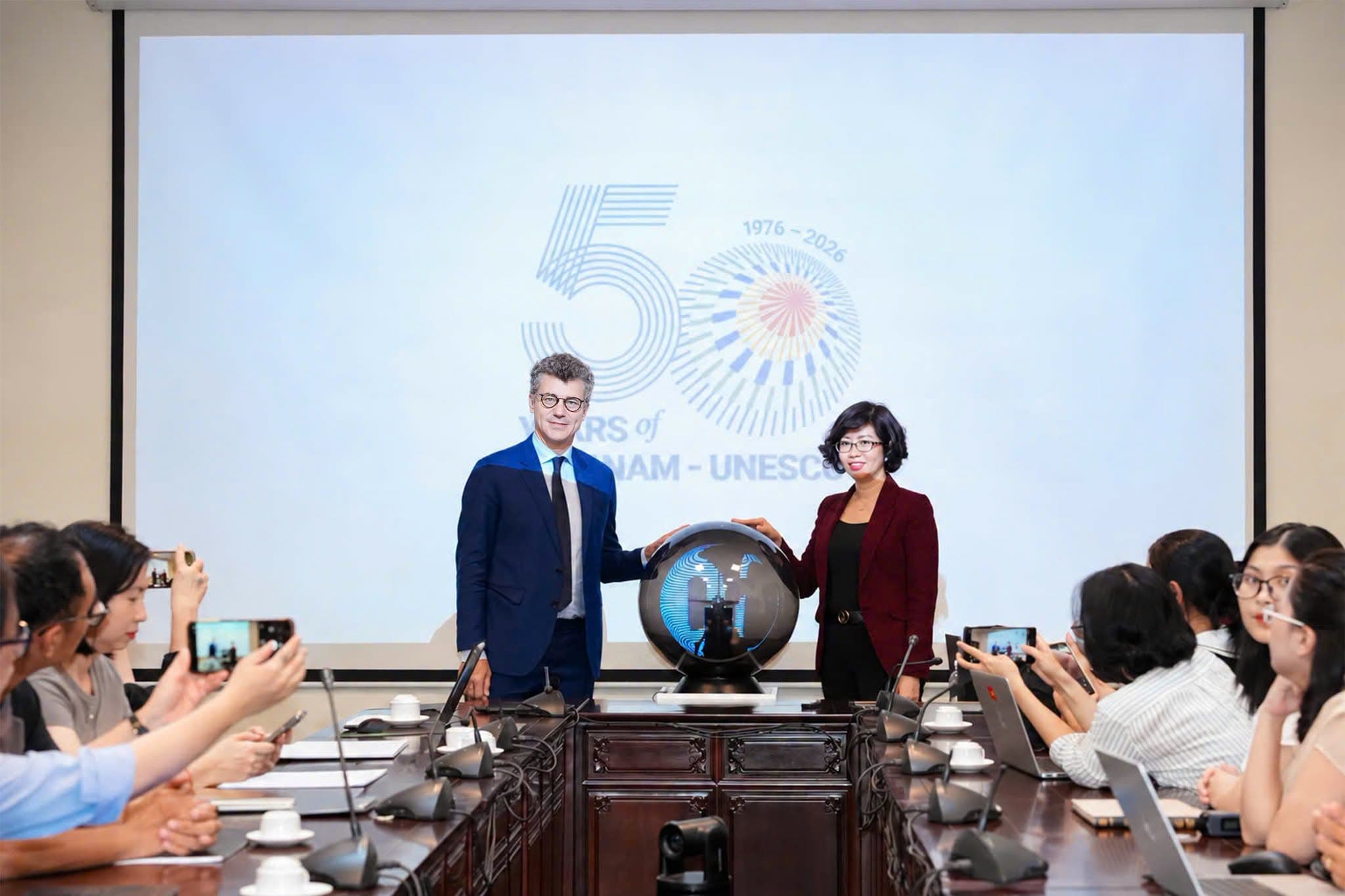
The commemorative key visual was selected from a nationwide design competition launched in April 2026 by the UNESCO Office in Viet Nam and the Viet Nam National Commission for UNESCO. Within nearly three weeks, the competition attracted 108 entries from across the country. The "Manifesco" team from Ho Chi Minh City won First Prize, with their design chosen as the official visual identity for the 50th-anniversary milestone.
The commemorative graphic incorporates multiple visual elements: the number "5" is formed by parallel lines in UNESCO blue, symbolizing the solid foundation nurtured through five decades of partnership. The number "0" is inspired by the image of the Vietnamese conical hat (nón lá). From a red center, multi-colored lines radiate outward, representing cultural diversity and the 17 Sustainable Development Goals.
According to the design concept presented by the authors, these elements seamlessly connect Vietnamese cultural identity with the global vision of the Viet Nam - UNESCO partnership.
Throughout 2026, the 50th anniversary of Viet Nam - UNESCO relations is being celebrated through a series of activities reflecting on past achievements while looking forward to future strategic priorities.